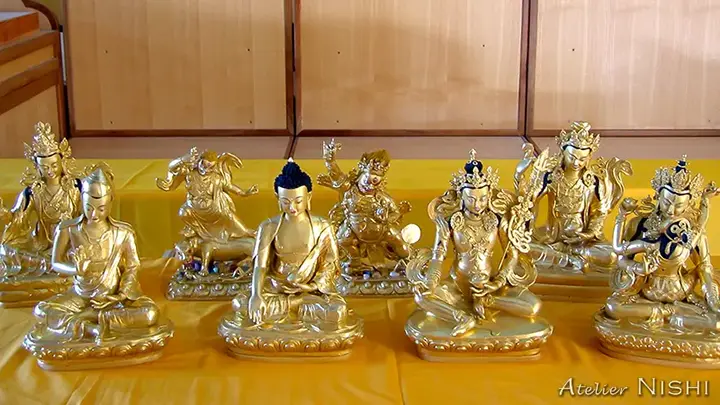
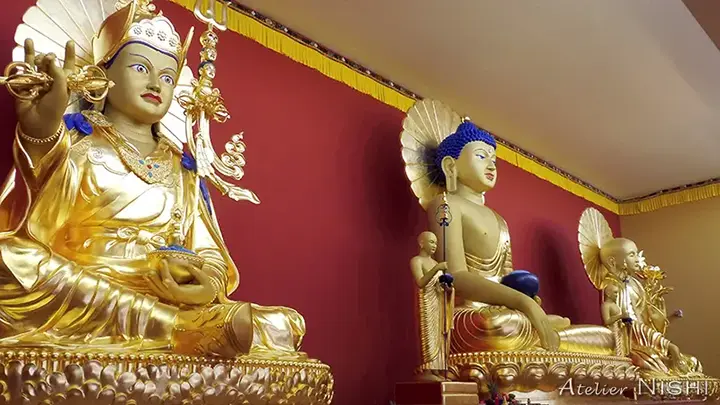
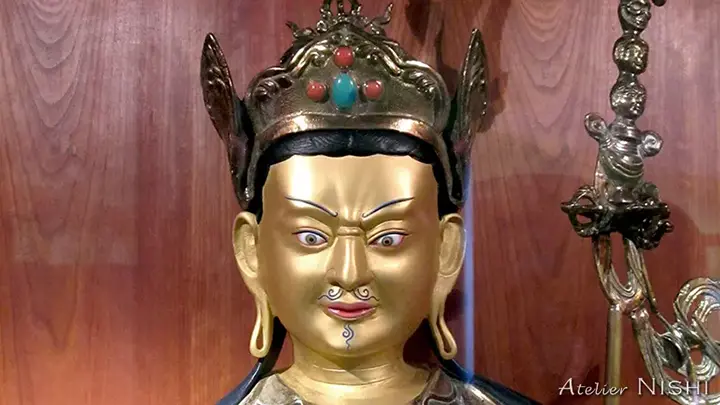
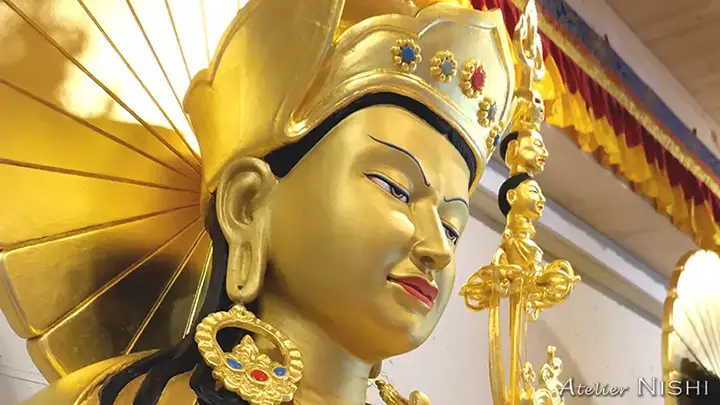
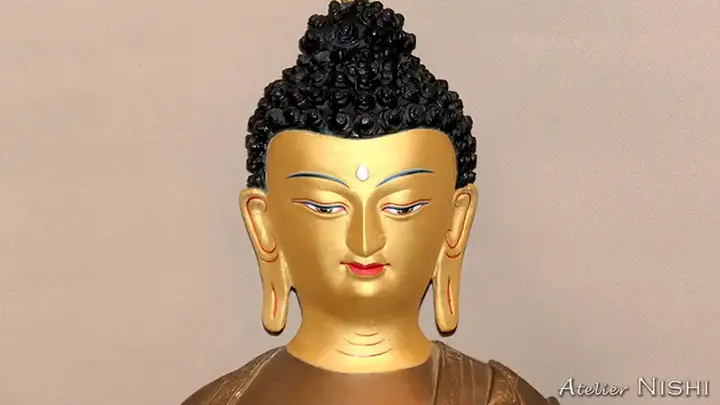
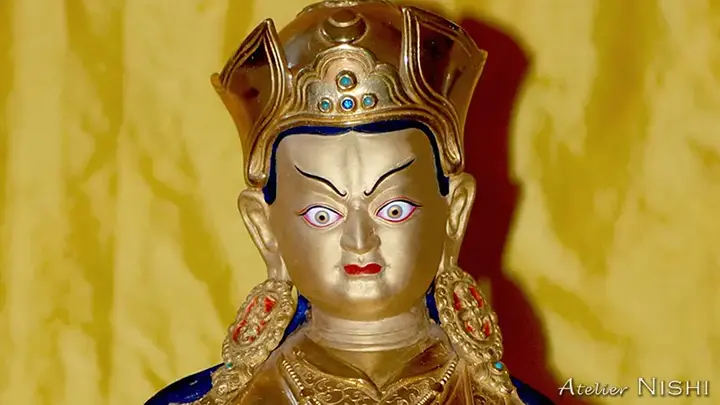
Unlike thangka painting, where the painter creates the entire image from scratch, statue painting begins with a pre-formed face and expression. The painter usually follows the existing contours to achieve a natural-looking result, honoring the original sculptor’s craftsmanship.
However, at times, subtle adjustments are made with great care to ensure they do not conflict with the statue’s original form, in accordance with the patron’s specific requests, reflecting the symbolic features associated with each deity, and—most importantly—incorporating valuable guidance from lamas.
In cases of restoration or repainting, whether to preserve the original face or paint a new one is carefully discussed with the client before restoration begins.
Please note that while Yoji Nishi was responsible for the painting work, all the statues featured here were created by different artists.